
How to Check Criminal History in Orange County
Start by deciding which fact needs proof. Orange County court clerks hold case dockets, filed charges, orders, and dispositions. The Orange County Sheriff's Office holds reports created by its deputies. Central Virginia Regional Jail handles local booking and custody records, while the Virginia Department of State Police maintains the central criminal-history exchange. Each source describes a different stage. A name, date of birth, approximate event date, location, and case or report number can help distinguish people with similar names.
The Orange County government directory is a useful source for identifying the correct local office before a request.
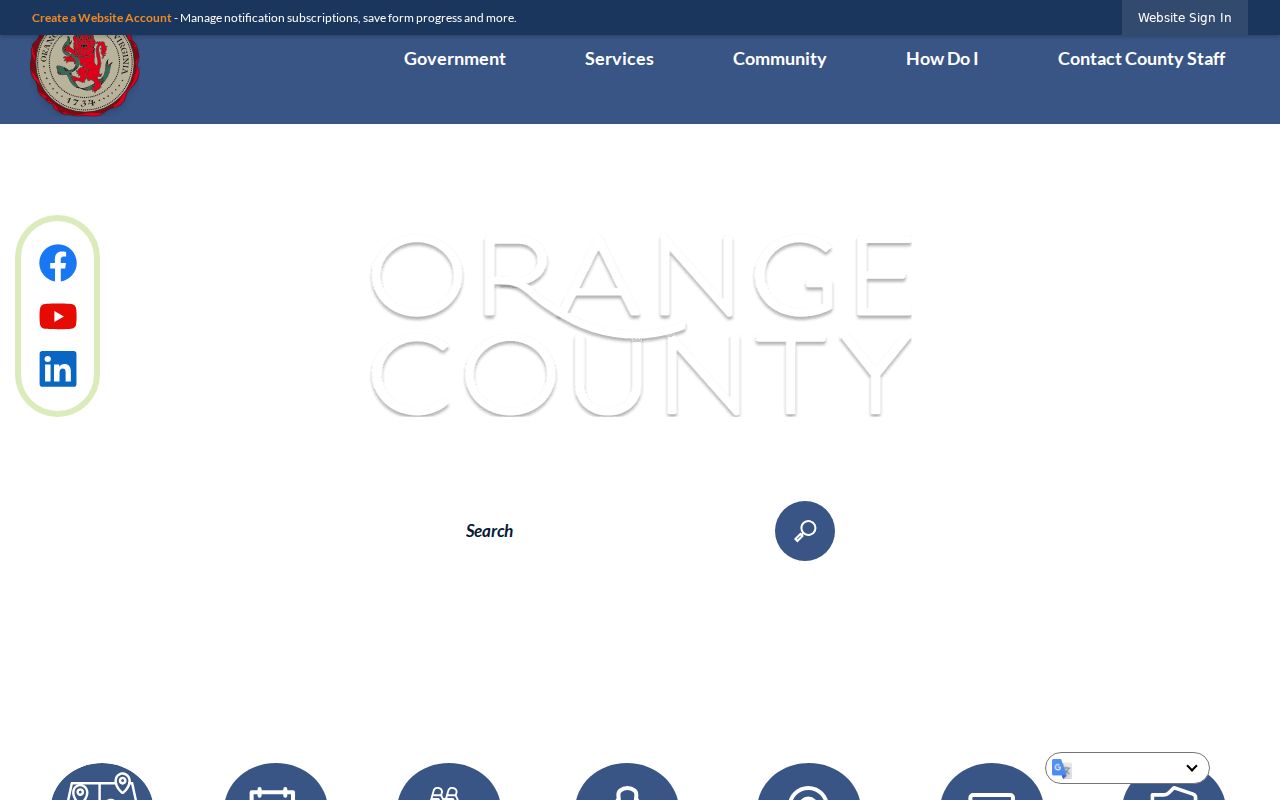
The directory reflects Orange County's divided records system: one department cannot provide every court, police, jail, or state record.
- Search Orange General District Court for misdemeanors, traffic charges, arraignments, and early felony events.
- Search Orange Circuit Court for indicted felonies and appeals from district court.
- Ask the correct clerk for certified copies, older files, or documents not shown online.
- Request the incident or arrest report from the agency that created it, not from an unrelated county office.
- Call the regional jail for recent local custody, or use VADOC for state custody and supervision.
- Use VSP when a consent-based Virginia background check or personal record review is the actual goal.
Orange County Records from One Arrest
A single Orange County arrest can create four records that do not say the same thing. The arresting agency writes an incident or arrest report. The regional jail records intake and custody. A magistrate and the courts create warrant, bond, charging, hearing, and disposition entries. Qualifying fingerprints and charge data also move toward the VSP Central Criminal Records Exchange. The first charge can change before a prosecutor files the case, and the filed charge can change again before judgment.
The Orange County Sheriff's Office page shows the local agency responsible for deputy-created reports and warrant service.

That agency record is only the first layer. A careful Orange County criminal-record review compares the report with the booking record, the final court disposition, and any CCRE entry.
Record flow: Agency report → regional booking → Orange County court case → disposition report to VSP CCRE. Each custodian controls its own part.
Official Virginia Background Checks
Virginia's general-public product is the SP-167 request administered by VSP CARE and CCRE. The VSP CATS form generator prepares a request for printing, required notarization, and mailing. It is not an instant public conviction search. A general request needs the subject's sworn written consent. The listed processing estimate is about 15 to 20 business days after receipt, and VSP states that no expedited service is available.
Name checks and fingerprint checks are not interchangeable. SP-167 searches Virginia data by name and consent. Authorized Live Scan agencies and local law enforcement provide fingerprint capture where a law permits a state or FBI check. A person seeking a national self-review may use the FBI Identity History Summary process. Orange County court and sheriff records remain source documents, not substitutes for those official repository products.
| Product | Listed fee | Scope |
|---|---|---|
| SP-167 Virginia history | $15 | Consent-based Virginia name search |
| Virginia history plus registry | $20 | Combined mailed request |
| Voluntary fingerprints | Up to $10 first set; $5 more sets | Fingerprint capture, not a result by itself |
| Authorized VSP and FBI search | $27 | State and federal check where statute allows |
| FBI self-review | $18 | Subject's national fingerprint summary |
Orange County Courthouse Record Floors
The courthouse at 110 North Madison Road sorts Orange County criminal records by both floor and jurisdiction. General District Court occupies Suite 100. It handles misdemeanors, traffic matters, arraignments, and preliminary felony proceedings. Juvenile and Domestic Relations Court is in Suite 200, but its juvenile case details are not available through the public online case search. Circuit Court is in Suite 300 and handles felony trials and district-court appeals. A visitor seeking a copy must choose the clerk for the court that handled the case.
The Orange County Commonwealth's Attorney page documents the local prosecutor's role across all three courts and both incorporated towns.

The prosecutor presents charges, but the relevant clerk remains the custodian of the filed case, judgment, and sentencing order. Orange County court security also bans cell phones, weapons, and pocketknives from the courthouse, so records-counter visitors should plan before arrival.
Types of Criminal Records
Orange County criminal records differ by creator and purpose. An agency report gives the reported event and allegation. A booking record proves intake or custody, not guilt. A charging document states what was brought to court. The court file follows hearings through disposition and sentence. CCRE organizes reportable arrest cycles and dispositions at the state level, while a registry entry or a VADOC supervision result answers a narrower statutory question.
Warrants, juvenile records, and sealed material require special care. Orange County has no verified public warrant database. Juvenile matters are separately maintained and largely restricted. Sealed or expunged material is removed from ordinary access, though limited lawful access can remain. Dismissal alone does not erase every copy of an arrest record.
Virginia divides felonies into Classes 1 through 6 and misdemeanors into Classes 1 through 4. Orange Circuit Court tries felonies, while General District Court hears misdemeanors and preliminary felony matters. The flexible punishment range for some Class 5 and Class 6 offenses does not make the filed felony an automatic misdemeanor. The final Orange County disposition controls how the outcome should be described.
The Orange County Victim/Witness Services page illustrates another part of the local justice system, but that program is not the custodian of a defendant's court file.

That distinction matters when tracing Orange County records: support offices can explain the process, while agencies and clerks release the records they actually hold.
No Single Orange County Record Search
Orange County does not offer one box that searches every local criminal record. General District and Circuit matters use different court routes, and Virginia's judiciary warns that circuit coverage is not one complete statewide system. Older files or missing Orange County entries may require a call to the clerk. Town police reports stay with Orange Police or Gordonsville Police rather than moving into a countywide report pool.
A blank result has several possible causes. The spelling may differ, the event may be too recent, a summons may have created no jail booking, or a felony may still be in General District before indictment. Juvenile confidentiality and sealing also limit visibility. None of those possibilities should be guessed from silence alone. Verify the court level, search name variants, use a known case number, and ask the custodian when the record should exist but does not appear.
OCSO Records Clerk
11282 Government Center Drive, Suite A, Orange, VA 22960
(540) 672-7204
Requests may be made by mail, fax, email, in person, or phone. Main fax: (540) 672-7824.
Orange Circuit Clerk
110 North Madison Road, Suite 300, Orange, VA 22960
(540) 672-6162
Counter hours are 8:00 a.m. to 4:30 p.m. for felony files, district appeals, and certified court copies.
Note: A General District felony listing often reflects a preliminary stage, while Orange Circuit holds the later felony trial record after indictment.
What an Orange County Criminal Record Shows
The contents depend on the source. Orange County court files center on a case number, court, filed charge, dates, docket events, disposition, financial entries, orders, and sentence. An arrest report may add the event location, officer, probable-cause narrative, alleged offenses, property, and transport destination. A regional booking entry is custody-centered. CCRE can show linked Virginia arrest cycles and reported outcomes, but it does not reproduce the full incident narrative.
| Name & Identifiers | Names, aliases, and agency or state identifiers used to link the correct record |
|---|---|
| Arrest / Booking Data | Event and intake dates, arresting agency, initial charge, bond, facility, and release or transfer |
| Charges & Statutes | Alleged offense descriptions and code sections, which may change as the case moves |
| Disposition | The court outcome, such as conviction, acquittal, dismissal, or nolle prosequi |
| Sentence | Judicial penalties, probation, restitution, and other terms after a conviction |
| Custody / Supervision Status | Regional jail, VADOC prison, probation, parole, release, or transfer information where public |
Identity matching is essential. A name alone does not prove that an Orange County result belongs to the intended person. Sensitive personal identifiers, victim information, juvenile facts, and sealed data may be withheld or redacted.
Orange County Regional Custody Records
Orange County does not run a standalone county jail. Central Virginia Regional Jail serves Orange with Fluvanna, Greene, Louisa, and Madison. No working official public Orange County booking roster was verified during research. For recent custody, call the jail at (540) 672-3222 with a full name and approximate booking date. A person who was released or transferred may no longer appear as current custody.
State imprisonment and supervision use a different channel. The VADOC locator accepts a full last name with at least the first three letters of a first name, or an exact seven-digit DOC ID. Optional filters cover location, race, gender, and age range. VADOC says the tool updates daily but can still contain delayed or inaccurate data.
| VADOC field | Required | Format or use |
|---|---|---|
| First Name | Name route | First three letters accepted |
| Last Name | Name route | Enter the full last name |
| DOC ID # | ID route | Exactly seven digits; replaces the name route |
| Location, Race, Gender, Age Range | Optional | Filters that can narrow results |
| Agreement checkbox | Yes | Acknowledge the locator disclaimer before search |
The VADOC facilities and offices directory identifies the state correctional network and Culpeper District 26, which serves Orange County supervision cases.
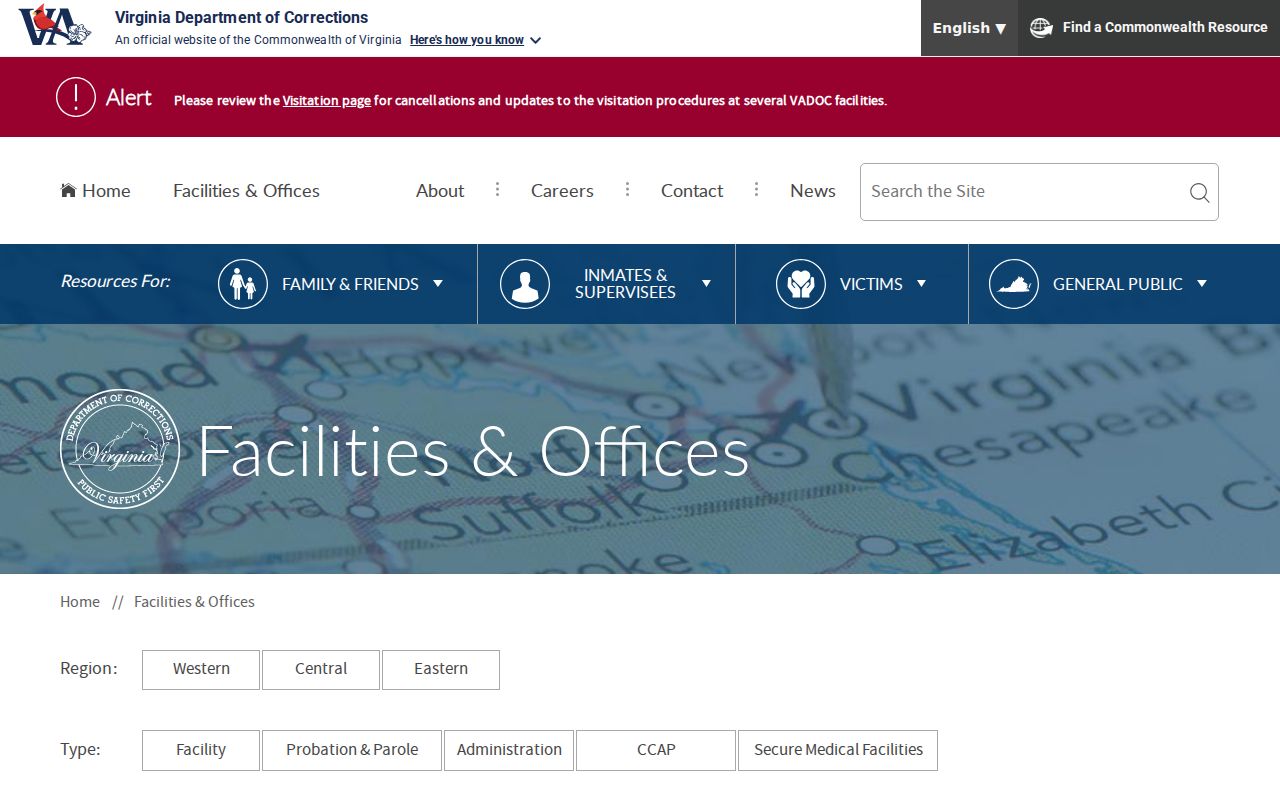
The directory helps route Orange County probation, parole, and post-release questions after the Circuit Court sentence, while the court file remains the source for the terms imposed.
Public Access Laws
The Virginia Freedom of Information Act gives access to existing public records subject to exemptions. Orange County and OCSO requests may seek inspection, copies, or both. A request does not need a special form, need not be written, and need not use the term FOIA. It should describe an existing record with reasonable detail. The public body may charge reasonable actual costs, and a requester may ask for an estimate. The official response clock is five working days for a response category, not a promise that every large production will be complete by then.
Key Virginia laws:
Virginia FOIA creates the access framework for existing public records and statutory exemptions.
Virginia Code § 2.2-3706 governs adult arrest facts, booking photos, and law-enforcement records.
Virginia Code § 19.2-389 limits CCRE dissemination and supports sworn consent-based requests.
Virginia Code § 9.1-132 gives a person a route to inspect and challenge their own state record.
Public access does not turn an allegation into guilt. Orange County investigative files may contain exempt or redacted parts, and agencies should separate releasable material when the law permits rather than withhold a whole record only because one part is protected.
Orange County Warrants Without a Portal
No official public Orange County active-warrant database or statewide Virginia warrant portal was found. OCSO Patrol serves criminal warrants, while court and civil-process personnel also handle specific process. A warrant in debt is a civil filing and should not be confused with a criminal arrest warrant. Bench warrants or capias process can follow a failure to appear or comply; other arrest warrants begin with a probable-cause finding.
Use a verified fallback chain. Contact OCSO at (540) 672-1200 for procedure without assuming staff will confirm status by phone. Search the underlying Orange County case in the likely court, then contact the issuing clerk. A specific OCSO records request may seek releasable existing warrant material. Search warrants, sealed indictments, juvenile process, and active investigative facts may remain unavailable.
If a possible warrant concerns the reader's own case, verify the exact identity, issuing court, case number, charge, bond status, and instructions with the court or agency. Do not rely on an unofficial list or assume that paying unrelated costs clears the process.
Sealed, Expunged & Restricted
Virginia uses both expungement and sealing. Traditional expungement under Virginia Code §19.2-392.2 primarily addresses qualifying acquittals, dismissals, absolute-innocence pardons, and certain vacated-conviction cases. The Orange Circuit Court process uses petition CC-1473 with the civil cover sheet, required copies and fingerprints, a CCRE report, notice to the Commonwealth, and a hearing unless a qualifying no-objection path applies.
Virginia's newer sealing process is separate and has its own judiciary forms. Major statutory changes were scheduled for December 1, 2026, after the research date, so future eligibility should not be treated as current law. Orange County's Circuit Clerk should confirm the current form set, copies, local hearing practice, and filing cost because no reliable county-specific filing fee was found.
Juvenile histories, victim and minor identifiers, financial identifiers, and parts of investigative files may also be restricted without an expungement order. After relief, compare the Orange County court file or portal with a personal VSP response. Send the signed order to a custodian that still shows a record.
Correcting Orange County Criminal Records
A wrong disposition is not the same problem as a lawfully public record. If CCRE shows the wrong outcome for an Orange County case, first obtain the certified court disposition and compare it with the state response. Virginia Code §9.1-132 allows the subject or an attorney to inspect the subject's record, obtain a copy for a challenge, and ask the custodian to purge, modify, or supplement inaccurate data.
Start with the arresting or originating agency because it supplied the event. CCRE then checks its own documentation and the source agency under the state correction rule. Corrected data is distributed to recipients found in the prior two-year dissemination log. If the agency report itself is wrong, direct the dispute to that agency. If the court docket is wrong, use the Orange County clerk that owns the file.
- Disposition
- The court's recorded outcome, not the initial arrest charge.
- Nolle prosequi
- The prosecutor ended the current prosecution; it is not an acquittal.
- Dismissal
- The charge ended in that case, but source arrest records do not vanish on their own.
- Expungement
- A court process that removes or separately treats qualifying records under Virginia law.
Orange County Records Across Time
Orange County was formed in 1734 and took its name from William IV, Prince of Orange. The Town of Orange became the county's judicial seat after Culpeper County separated in 1749. That history still shapes access. Court records and prosecution offices cluster in the Town of Orange, even when the reported event occurred across the county's 341.08 square miles or within Gordonsville.
The official Orange County history provides the county-seat timeline behind that modern records geography.

Today, only Orange and Gordonsville are incorporated towns with their own police departments. OCSO covers the wider rural area. The 2025 General District statistics report 288 Orange felony filings, but that is court workload, not 288 convictions or 288 distinct people. A filing count should never be read as a crime rate.
Criminal Records by City in Orange County
Orange County has two incorporated towns, Orange and Gordonsville. Each town police department keeps its own incident and arrest reports, but neither town has a municipal criminal court or jail. Adult cases route to Orange General District Court and Circuit Court, while local custody goes through Central Virginia Regional Jail. The town pages focus on those city-level starting points without adding a third unincorporated place.
Orange Criminal History
2020 population 4,880 · Police records begin with Orange Police; criminal cases move to the county courts.
Gordonsville Criminal History
2020 population 1,402 · Police records route through the Town Clerk and Police Department; court files are county-held.
The two cards match Orange County's full incorporated-town list. They also reflect why city police reports, regional custody records, and county court files must be checked as separate sources.